
The shortest route is not the answer
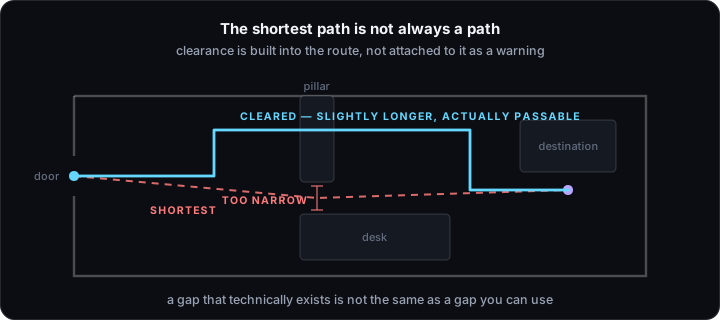
Give a naive routing algorithm a floor plan and it will hand you the shortest line between two points. That line will happily graze a doorframe, thread a 40-centimetre gap between a desk and a pillar, and send you down a flight of stairs.
For a lot of people, that route is not merely uncomfortable. It is not a route at all.
Clearance is part of the path, not a warning about it
The distinction matters. A route that is computed tight and then annotated "narrow section ahead" has pushed the problem onto the person walking it, usually at the worst possible moment.
ICIDO builds clearance into the path itself. Obstacle clearance is a property of how the route is generated, so the path you are given is one that fits — rather than one you have to negotiate.
Two consequences follow:
- The route may be longer than the geometric minimum, on purpose
- It may ignore a gap that technically exists, because technically-existing is not the same as passable
Preferences about behaviour, never about people
ICIDO's accessibility settings are all statements about how the app should behave:
- Prefer step-free routes
- Avoid stairs
- Wider clearances
- Screen reader support
- Larger text
- Higher contrast
- Reduced motion
- Audio cues
- Haptic cues
Every one of those is a boolean. On, or off.
What you will not find is a field asking what condition you have, why you need step-free routing, or anything resembling a diagnosis. ICIDO never asks for medical information, and there is nowhere in the app to enter it — not as a policy decision that could be reversed later, but because the field does not exist in the first place.
"Avoid stairs" is a complete and sufficient instruction. The reason is nobody else's business.
This is also simply better engineering. The app does not need to know why. It needs to know what to do.
Guidance you can hear and feel
A route drawn on a screen assumes you are looking at the screen. That is a poor assumption while walking through an unfamiliar building, and a useless one for anyone who does not use a screen at all.
Audio and haptic cues exist so that guidance can arrive through hearing or touch rather than sight. They are settings rather than a separate mode, because someone might want spoken directions and a visible path, or either alone, depending on the building and the day.
Being honest about what this is
Indoor navigation is an aid, not a guarantee. Buildings change, furniture moves, and a scan describes a place as it was when it was scanned. ICIDO is built to be useful and to be clear about its limits — and the Terms of Service say so plainly, because a navigation tool that oversells its certainty is a navigation tool that will eventually put someone somewhere they did not want to be.